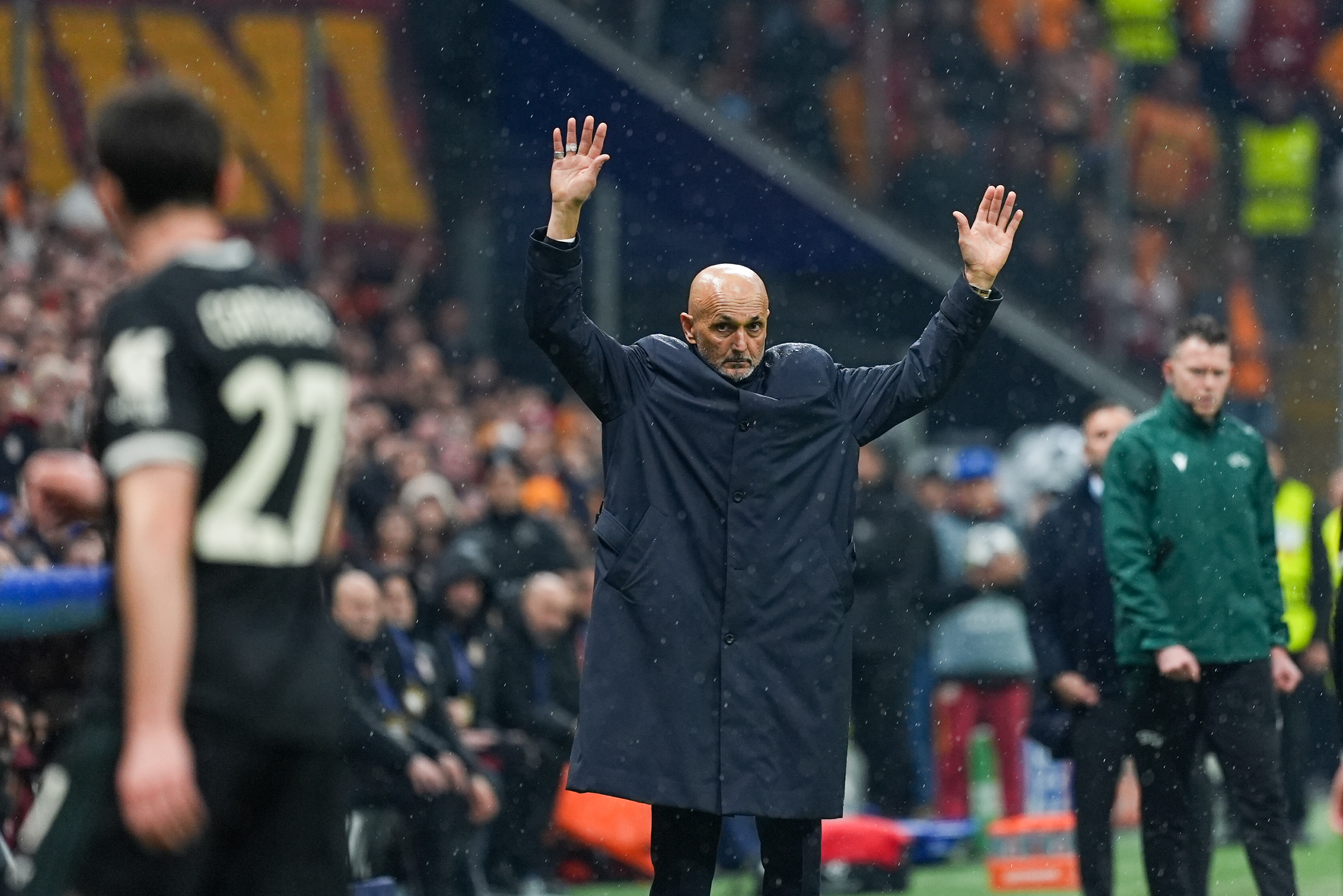
Old habits die hard. Just ask Juventus.
Before Tuesday, it had been just over 12 years since Juventus last traveled to Ali Sami Yen Sports Complex. They needed a stalemate in order to progress to the UEFA Champions League knockout round, whereas Galatasaray needed a win. Gala ended up winning 1-0 via Wesley Sneijder’s late goal and confirming their spot in the Round of 16 — the last time they have reached that stage.
Juve bounced back from the disappointment in the Istanbul snow in stellar fashion by reaching two of the next three Champions League finals, before losing to eventual champions Real Madrid in the quarterfinals courtesy of a first-leg brace and a last-second winner in the second leg via Cristiano Ronaldo. But despite signing Ronaldo in the summer of 2018 for a Serie A record €100 million, Juventus failed to take a step forward. In fact, they took a few steps backwards.
After losing to Ajax in the quarterfinals, Juve would proceed to lose to Lyon, Porto and Villarreal in the Round of 16, before a nightmare 2022-23 season that saw them exit the group stage and finish seventh in the table and miss out on Europe entirely after being deducted 10 points for capital gains violations. And after returning to the Champions League in 2024-25 and finishing 20th in the league phase, Juventus would miss out on the Round of 16 after relinquishing a first-leg advantage and losing to PSV Eindhoven.
All’s this to say: Juventus are not the same team of a decade ago, the one that ruled Italian football with an iron fist and that was situated amongst the best teams in the continent. They are no longer a genuine threat to winning their first Champions League in three decades. And if they could lose to teams like Ajax, Lyon, Porto, Villarreal and PSV, why couldn’t they lose to Galatasaray?
Still, you couldn’t help but think that this might have been different. Juve had made considerable strides in their first few months under Luciano Spalletti, looking far more measured and composed in possession and displaying a consistent identity in their play. Surely, this wasn’t just a simple new manager — surely, it was the start of something new?
Even after a beleaguered start to the new year that had seen them draw to Monaco and Lecce and lose at Cagliari, even after a dreadful run of form that had seen them lose at Inter, draw to Lazio, and get knocked out of the Coppa Italia by Atalanta, you couldn’t help but think Juve were due a big performance. Instead, what they got was a bucket of cold water and a desperately needed wake-up call.
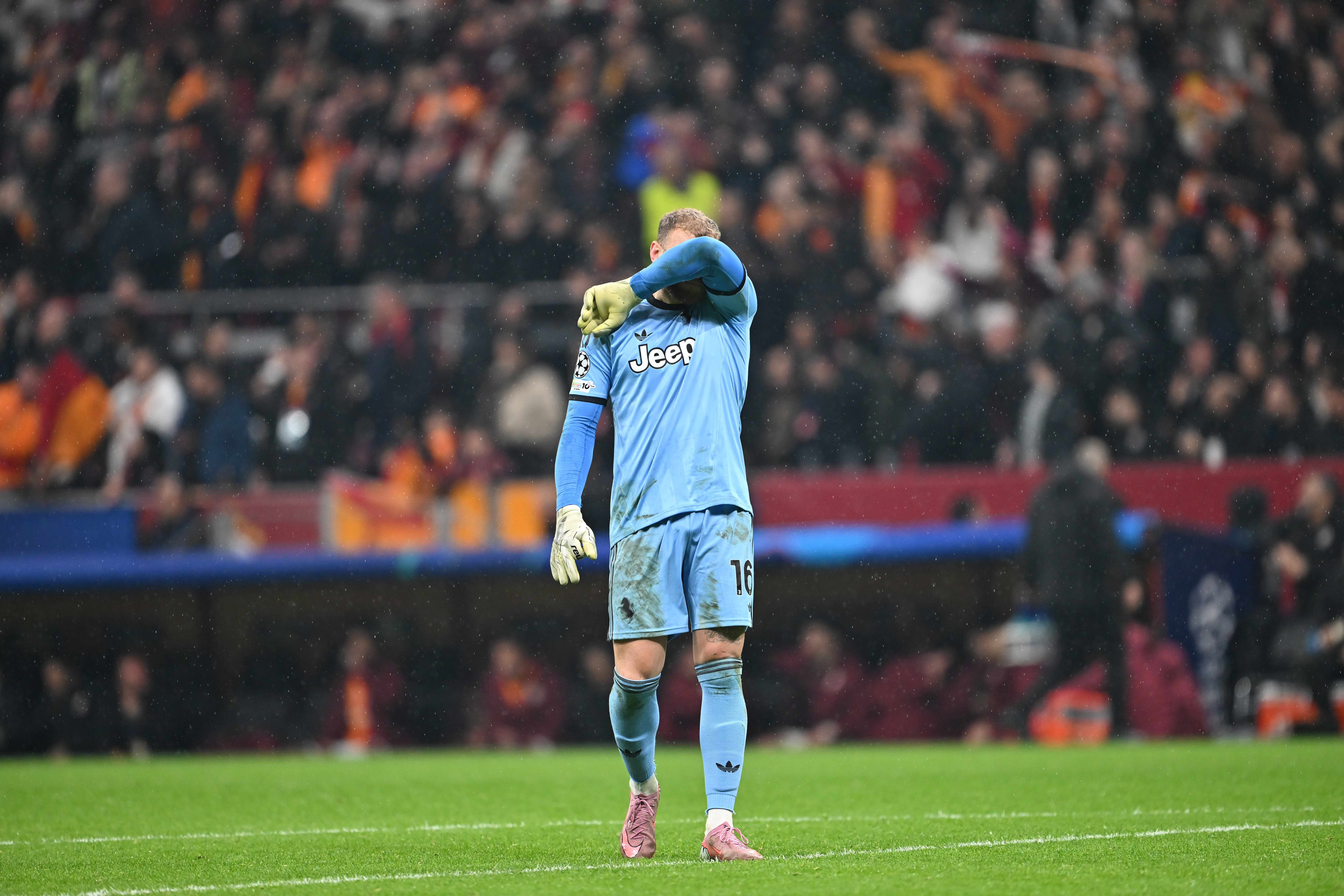
Gala looked the far more energized side from the offset, with Yunus Akgün working a quick one-two with Gabriel Sara and taking aim from just outside the box, only to blaze his shot wide. Then, Victor Osimhen capitalized on a loose touch from Kenan Yıldız and won the ball back at the edge of the box, eventually working it towards Sara, who was there to slot home a well-drilled finish into the bottom left corner.
It took less than a minute for Juve to react, with Andrea Cambiaso racing forward and weighing up a cross for Pierre Kalulu to latch onto. Uğurcan Çakır was able to parry the header away, deflecting it into the path of Teun Koopmeiners who made no mistake from close range. 16 minutes later, Koopmeiners turned the tide in Juve’s favor after dragging Davinson Sánchez out of possession and teeing up a one-two with Weston McKennie before letting loose with a rocket.
But whilst Juve were ahead on the score sheet, they never looked remotely comfortable with their advantage. The warning signs were always there, like when they congested four bodies around the ball carrier (Sara) and the nearest passing option (Noa Lang), but left an avenue open for Sara to find Akgün between the lines. When he should have been marking his compatriot, Yıldız was merely waiting to see the events unfold and hoping and praying as Akgün forced a low save from Michele Di Gregorio.
Whether it was defending open-play situations or set-pieces, Juve’s lack of competitive instincts continued to bite them in the back: with every failed ground duel or unconvincing defense of a corner kick, Gala grew more and more confident that they had what it took to not only equalize, but win.
They eventually got their wish just after the restart, with both Juan Cabal and Manuel Locatelli misjudging a high ball and losing an aerial duel to a man considerably shorter than both of them — Lucas Torreira. The ball landed to Barış Alper Yılmaz, who unleashed a ferocious shot that Di Gregorio could merely muster a light fingertip save, enabling Lang to coolly slot home into an empty net.
Whilst McKennie did somewhat well in his false 9 role, the same cannot be said about Juve’s other two attackers — Yıldız and Francisco Conceição. Both players proved to be inefficient and ineffective: the former getting bullied in physical duels and failing to provide a reference point in attack, the latter constantly overthinking and failing to generate power and accuracy with his shots.
Ultimately, they failed to keep Gala honest: they failed to make them respect their attacking prowess. This meant that the Turks could turn up the heat and chase the victory without being too bothered about defending dangerous counter-attacks. In contrast to Juve’s disjointed attacking trio, Galatasaray were clicking on all cylinders in their attacking moves, constantly looking dangerous and unpredictable.
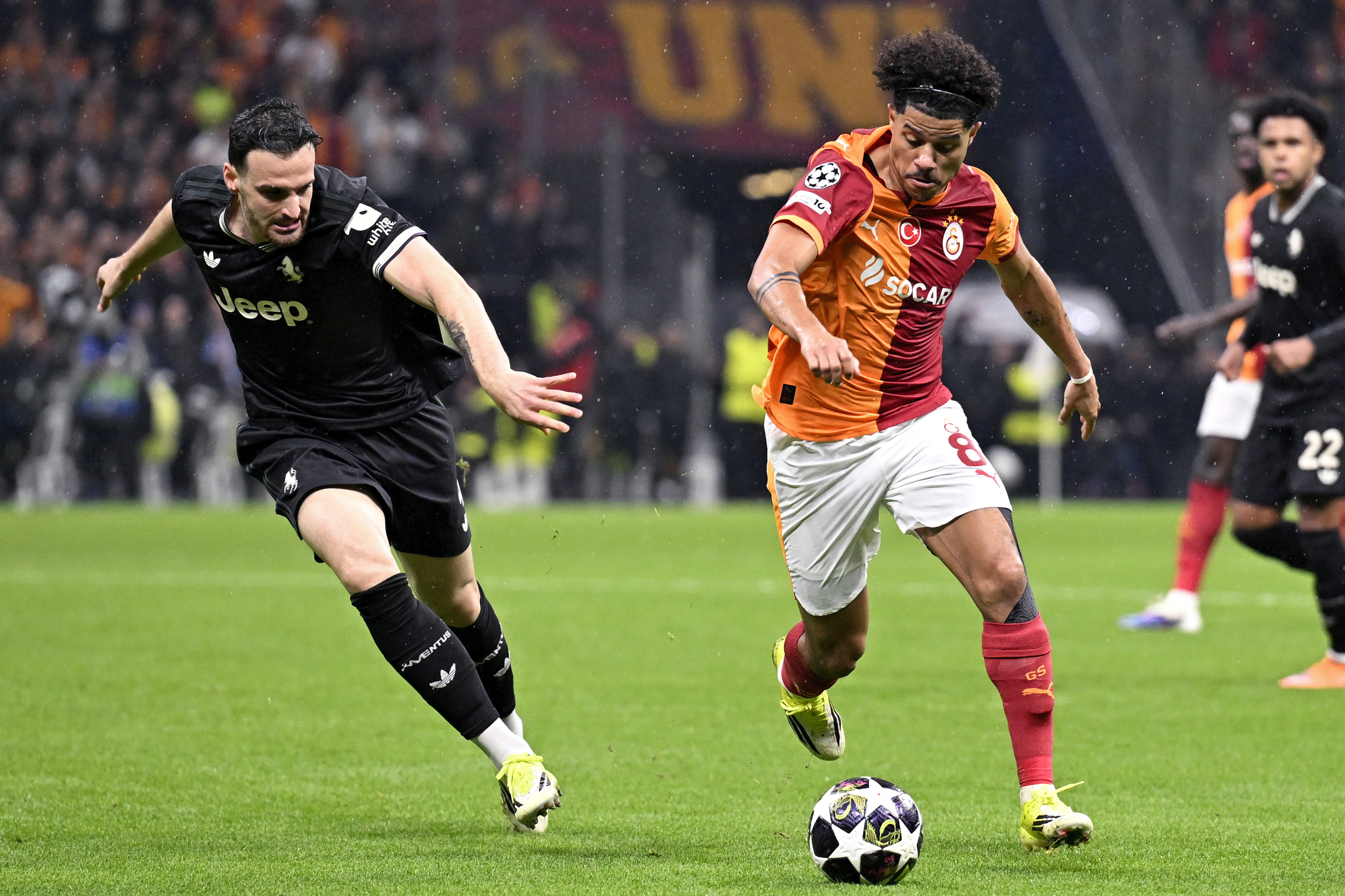
When Yılmaz sent Cabal for a hot dog with a fairly routine drop of the shoulder, Cabal decided to hack him down just before he entered the box. Sara took aim and curled a free kick past Lloyd Kelly and Khéphren Thuram and towards Sánchez, who redeemed himself with a powerful header into the box. Just like that, the floodgates had opened.
Things went from bad to worse when Cabal, rather than pursue a 1-v-1 duel at the halfway line, decided to wrestle Yılmaz to the ground. In doing so, Cabal became the second Juventus player to be subbed on and sent off in a Champions League game after another Colombian: Juan Cuadrado in the 2017 Champions League final. From that point on, it was no longer a question of whether Gala were going to win: it was a question of how many goals they were going to win by.
Instead of protecting a slender one-goal deficit going into the return leg, Juve shot themselves in the foot. Rather than aimlessly clearing the ball to the halfway line, Thuram decided to dribble on the edge of his own box before submit a back pass to Kelly. But Kelly never received it: Osimhen deftly crept up from behind him and poked the ball towards Lang.
One of the protagonists of PSV’s win last season, Lang continued to reap terror on the Bianconeri by blasting home the fourth goal. The cherry on the top came shortly after, as Osimhen outmuscled Kelly and set up Sacha Boey, who struck the ball with venom and clarity. Galatasaray had scored four uninterrupted goals, and Juventus had no answer whatsoever.
All things considered, it was a rude awakening for a Juve side that now finds itself all but guaranteed to miss out on the Round of 16 for yet another year. It confirmed many of the suspicions that had been sprouting in the minds of Juve supporters, previously considered to be cynical or pessimistic. And it confirmed that, even if somehow they do manage to erase a three-goal deficit in Turin next week, Juve have a lot of work ahead of them in the offseason.
For one, center back. Juve were able to dominate Italy thanks to a defensive spine of three legendary defenders — Leonardo Bonucci, Andrea Barzagli and Giorgio Chiellini. Today, however, they don’t have a single player who can remotely be considered one of the top defenders in Serie A apart from Gleison Bremer, who has been increasingly injury-prone as of late. When Bremer was withdrawn, Gala could smell blood in the air and realized the game was there for the taking.
For all of his improvements this season, Lloyd Kelly simply isn’t a top-tier defender, and at 27, he may never be. Spalletti has shuffled his options at left back between Cambiaso, Cabal, and Filip Kostić, but none of them came close to imposing themselves in 1v1 situations and limiting Gala’s threat in transition. In goal, Di Gregorio has failed to establish the same stalwart displays as the likes of Gianluigi Buffon and Wojciech Szczęsny before him.
In midfield, Locatelli went from delivering a world-class performance against Inter to a dismal display alongside Thuram, who failed to cover himself in glory. And in attack, it has been laid to bare that they don’t have an elite center forward like Serhou Guirassy or Osimhen or Hugo Ekitiké who can impose himself both as a target man as well as an elite finisher.
Some of Juve’s struggles were tactical, and some were individual: they afforded Gala far too much time on the ball and enabled them to easily filter the ball in between the lines, whilst they sabotaged themselves with a number of careless giveaways. All things considered, apart from Koopmeiners, no player was able to leave Istanbul with his head held high. And by the time the final whistle sounded, Juve fans were left wondering: do they really have a better team than Galatasaray?
The question for Spalletti, now, is this: Should he try to push for a comeback in the second leg? Or, should he conserve Juve’s batteries after a week that saw them fall to 10 men in back-to-back matches, and prioritize getting back to the victory column and focus all of his energy on beating Como and Roma in league play the next two weekends?
Whatever the answer, one thing’s for sure: Juve’s Champions League hopes are as good as gone.