It’s been a challenging period for Volkswagen in the United States, with declining sales across most of the manufacturer’s lineup for large portions of last year. Now that 2025’s total sales numbers are in, we can take a closer look at the full picture, and it’s not a rosy one. Including both passenger cars and SUVs, VW’s sales declined by 13% relative to 2024, with 329,813 vehicles sold. All but two individual models saw declines last year, and VW’s sedans and hatchbacks put in an especially poor showing.
Related: Volkswagen's 67% U.S. Profit Collapse Means Worse Deals for Buyers
Jetta and Golf Moving in the Wrong Direction
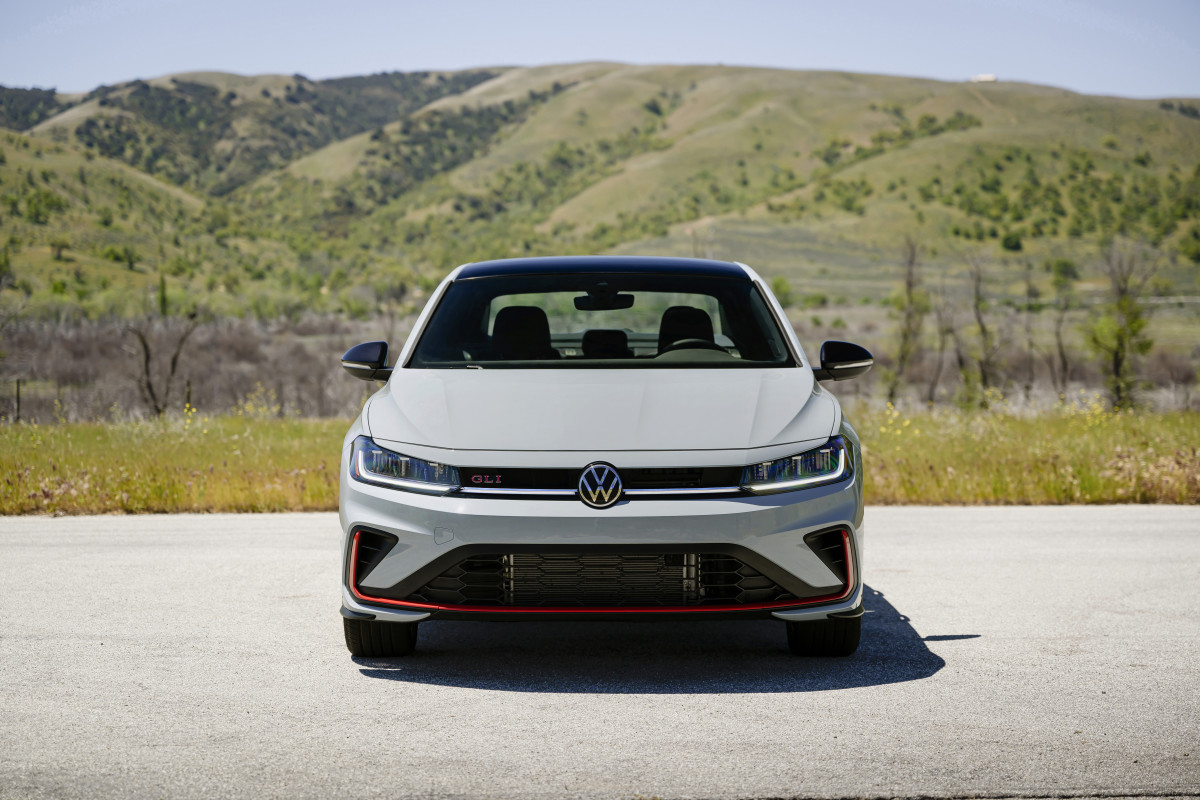
2025 Volkswagen Jetta GLI
Volkswagen
Volkswagen sold a total of 64,873 passenger cars in 2025, 26.6% lower than the tally in 2024. This group includes the Jetta, Golf GTI, and Golf R. The discontinued Arteon, one of the prettiest VW designs in recent memory, contributed 28 units last year, likely the last few examples still sitting on dealer lots. After that came the Golf R on 3,319 (down by 20.9%), the Golf GTI on 7,235 (-34.7%), and the Jetta on 54,291 (-24.4%).
Sales of the Golf declined since VW discontinued the non-performance variants of the hatchback a few years ago, but more worrying is the Jetta’s decline. In the fourth quarter, Jetta sales were down by 43.5% alone. On sale since 2018, the Jetta has been regularly upgraded, but its age is showing and more modern rivals are outselling it. For the 2026 model year, VW only added a handful of features to the Jetta, not enough to spur renewed interest in the sedan.
In the fourth quarter, the Golf GTI and R both experienced year-on-year declines of over 42%, too, which supports VW’s recent statement that the era of small gas-powered cars is coming to an end.
Related: Volkswagen Warns the Era of Small Gas Cars Is Ending
SUVs Performed Better, But Sales Still Down
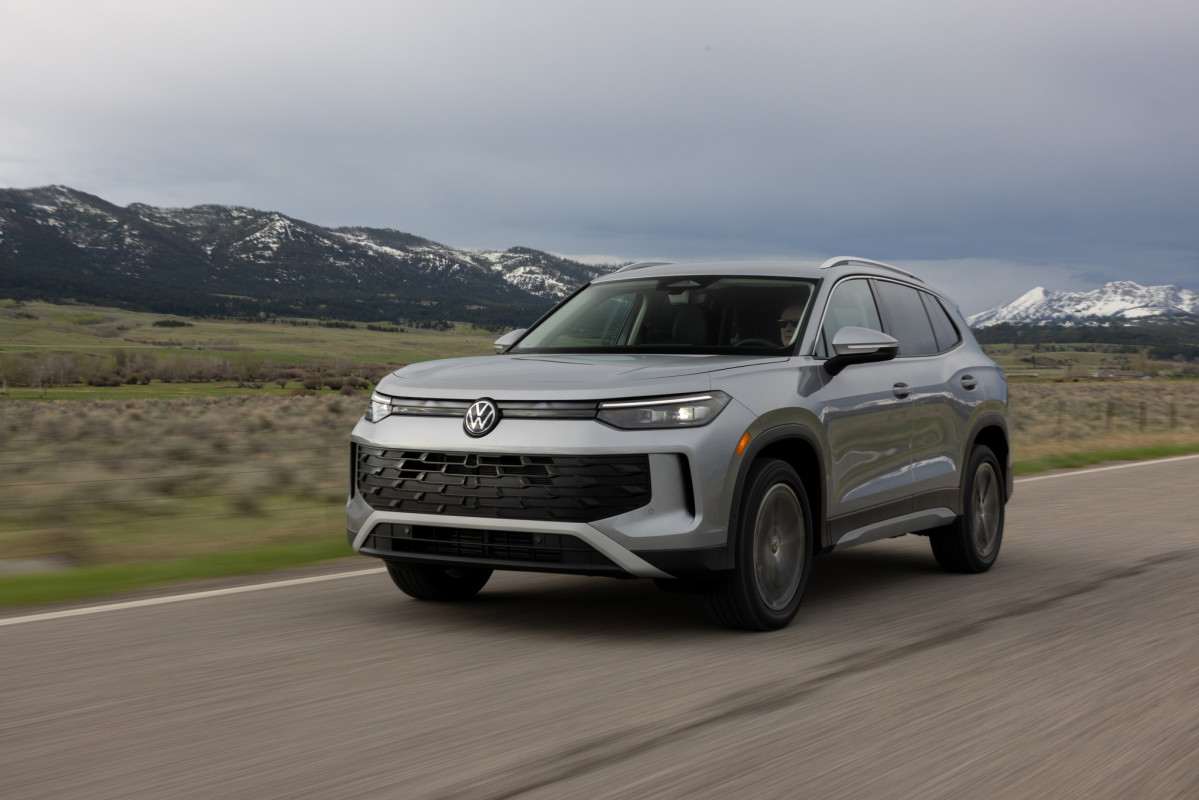
2026 Volkswagen Tiguan SE AWD
Volkswagen
VW’s SUVs proved to be a bit more resilient over the course of 2025, with 264,940 units sold, a decrease of 8.9% relative to 2024. The Tiguan remained the best-selling individual model with 78,621 units sold, down by 16.7%—this is rather disappointing considering that the Tiguan entered an all-new generation for the 2025 model year, so it’s one of the newer contenders in its segment.
After the Tiguan, the Atlas hit 71,044 units in 2025 (-5.9%), followed by the Taos on 55,198 (-13.6%), and the Atlas Cross Sport on 31,564 (-18.8%). The 2026 Atlas remained largely unchanged, but its spacious three-row layout continues to be popular. Only a few new features made it into 2026 versions of the Taos and ID.4.
VW’s two electric models, the ID.4 and ID.Buzz, were the only two models from the brand to see increased sales in 2025. The ID.4 sold 22,373 units, a 31.4% increase, while the ID.Buzz reached 6,140 units, up by 428.4%. Those percentage increases may sound impressive, but the ID.4’s sales were disproportionately represented in Q3, when EV buyers rushed to buy new models before the federal tax credit was scrapped. VW is planning to release a comprehensively updated ID.4 later this year.
While ID.Buzz sales were up, its tally of just over 6,000 units for the year is poor.
Related: Volkswagen Eyes a New Type of EV for the U.S. Market
Final Thoughts
Multiple factors likely contributed to VW’s declining sales last year. Key models like the Jetta are aging, while newer products like the ID.4 haven’t moved the goalposts far enough. The impact of tariffs on European brands and resulting price increases have put many manufacturers in a tricky spot, while EVs have been particularly affected by the vanishing tax credit.
But there’s some light at the end of the tunnel for Volkswagen. Besides a revised ID.4, the new ID. Polo revealed earlier this week points to a much more intuitive control interface for modern VWs. But VW will have to pay more attention to its non-EV range if it hopes to turn its fortunes around in 2026.